Blog
What is Brand Identity?
Quick answer: Brand identity is what you say about yourself. Brand image is what people actually believe. Most businesses obsess over one and ignore the other – and it costs them.
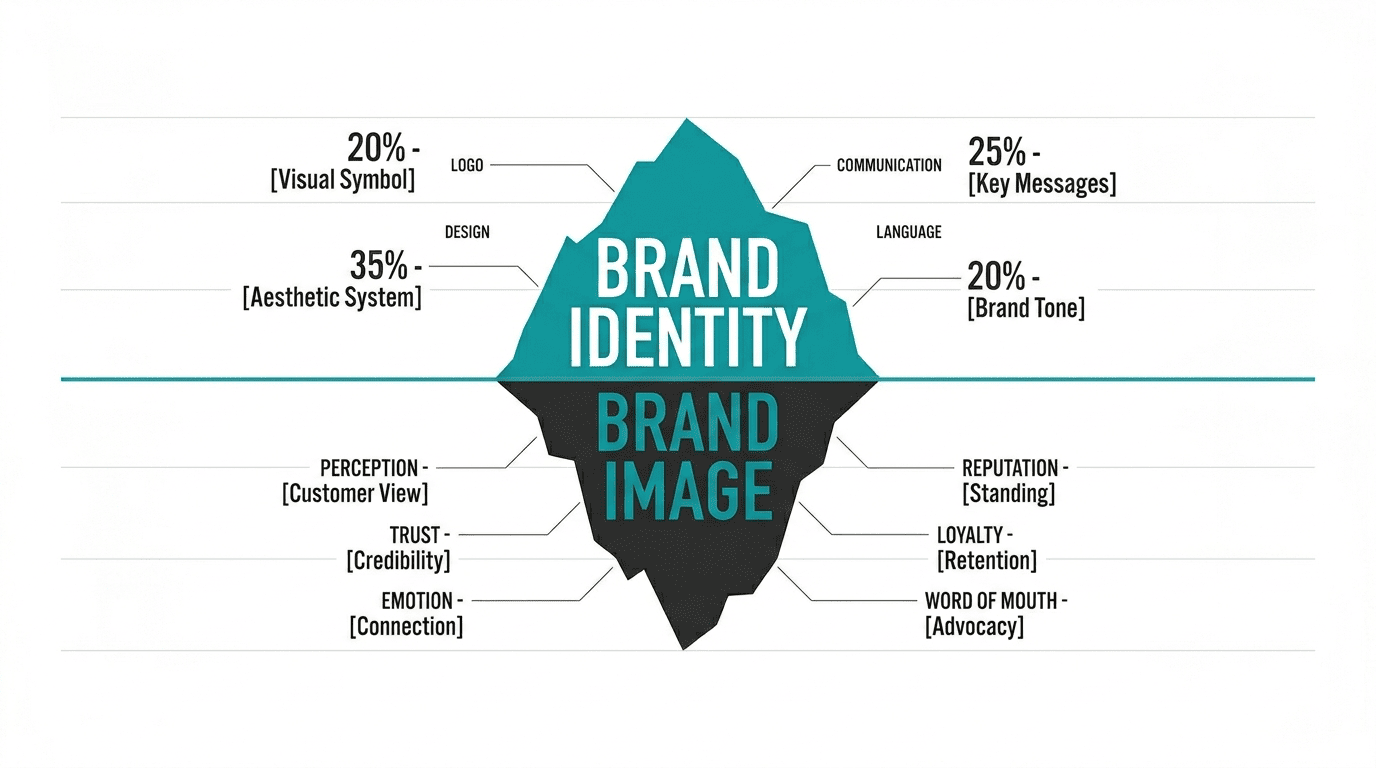
Brand identity vs brand image – most Indian businesses confuse the two, invest in the wrong one, and wonder why customers don’t trust them. Here’s the difference and why it matters. Brand identity is everything your business intentionally puts out into the world – your logo, colours, typography, tone of voice, tagline, messaging, and visual style.
- Logo and colour palette
- Font choices and visual style
- Brand voice (formal, casual, bold, warm)
- Tagline and messaging framework
- Website design and social media aesthetic
The Simple Way to Remember the Difference
Brand Identity | Brand Image | |
Defined by | You | Your audience |
Lives in | Your guidelines and assets | People’s minds |
You can | Control it fully | Influence it gradually |
Answers | Who do we want to be? | Who do they think we are? |
Nature | Active | Passive |
Why the Brand Identity vs Brand Image Gap Is a Business Problem
Here’s where most businesses go wrong: they invest in brand identity – a good logo, a clean website, professional content – and assume the image will follow automatically.
It doesn’t work that way.
Consistent branding across all channels can increase revenue by 23% – but only when the identity and the actual customer experience are aligned. When they’re not, you get a brand that looks polished but feels untrustworthy.
Poor brand consistency costs mid-sized companies more than $6 million in lost revenue annually, according to a survey of senior professionals. That’s not a design problem. That’s a gap between identity and image problem.
This is the core brand identity vs brand image gap most businesses never notice until it’s too late.
A Real Example: The Pune Business Scenario
Imagine a premium real estate developer in Pune. Their identity is flawless – a sophisticated logo, a high-end website, aspirational tagline, beautifully shot brochures.
But their WhatsApp response time is 3 days. Their sales team gives different pricing to different leads. Their Google reviews mention “poor after-sales communication.”
Their identity says premium. Their image says unreliable.
That gap is what loses customers who were already 80% decided. And no amount of better design will fix it – because the problem isn’t the brand assets. It’s the brand experience
Why Brand Image Is Harder to Fix Than Brand Identity
Changing your logo takes a week. Changing what people think of you takes years.
It takes 5 to 7 impressions for consumers to even remember a brand – and many more consistent positive experiences to shift a negative perception.
81% of people say they need to trust a brand before purchasing. That trust isn’t built by a rebrand. It’s built by showing up the same way, every time, across every touchpoint – for long enough that the audience starts to believe it.
This is why brand image is the harder, slower, more important work.
How to Align Your Brand Identity and Brand Image
Step 1: Audit the gap Ask your actual customers how they’d describe your brand in 3 words. Then look at your brand guidelines. If the words don’t overlap, you have a gap.
Step 2: Fix the experience before the aesthetics If your brand identity says “reliable” but your delivery timelines are inconsistent – fix the delivery first. A rebrand won’t help. Behaviour changes image; design doesn’t.
Step 3: Make your brand guidelines usable 95% of organisations have brand guidelines, but only 30% use them regularly. If your team doesn’t know the guidelines exist, the identity breaks down at every human touchpoint.
Step 4: Use customer feedback as a brand mirror Reviews, DMs, comments, referral language – these tell you what image you’ve actually built. Read them like a brand audit, not just a customer service task.
Step 5: Be consistent, not perfect Brand visibility is 3.5x higher for consistently presented brands than inconsistent ones. Consistency compounds. A brand that shows up the same way every week for a year will outperform a brand that launches a “perfect” campaign once.
What This Means for Indian Businesses Specifically
In India’s market – especially in cities like Pune, Mumbai, and Bangalore – brand image is shaped heavily by community trust, word of mouth, and family recommendations.
A Marathi family choosing a builder in Pune asks their relatives first. A startup founder picking a marketing agency checks LinkedIn posts, reads Google reviews, and maybe calls someone they know who worked with them.
Your brand image exists in those conversations – long before a potential customer ever lands on your website.
That’s why the most important branding work isn’t always the most visible. It’s the quality of work you deliver, the responsiveness of your team, and the way you handle things when they don’t go perfectly.
The Bottom Line
Brand identity is the promise. Brand image is the reputation.
Understanding brand identity vs brand image is the first step to building a brand people actually trust.
Every business needs both – and needs them to say the same thing. When they align, you get trust, loyalty, and the kind of word-of-mouth that no ad budget can buy.
When they don’t, you get a beautiful brand that nobody believes.
At Far & Wide, we work on both – helping brands build identities worth living up to, and communication strategies that make the image follow.